


fertilizer just as much as on proper irrigation and strong seeds. At Al Sultana, we recognize that soil—like a living organism—requires balanced nourishment to remain fertile and productive.
Our guide explores the types of fertilizers available, from balanced NPK compounds and slow-release formulations to high-solubility organic and liquid fertilizers. Understanding these types of fertilizers allows farmers to choose the ideal option, boosting crop yield, product quality, and overall profitability.
Table of Contents
Types of Fertilizers Offered by Al Sultana
Compound NPK Fertilizers (Balanced – Nitrogen / Phosphorus / Potassium)
NPK compound fertilizers form the backbone of most successful fertilization programs, containing a blend of nitrogen (N), which supports vegetative growth; phosphorus (P), which enhances root development and flowering; and potassium (K), which strengthens plants and improves disease resistance.
Al Sultana offers multiple formulations tailored to different growth stages, such as the balanced 15-15-15 for general growth phases, high-nitrogen blends like 20-10-10 to accelerate vegetative growth, or high-phosphorus formulations such as 10-20-10 to stimulate flowering and fruiting.
Slow-Release / Coated Fertilizers
This category is designed to supply nutrients to the soil over an extended period, reducing the need for frequent re-application. Examples include sulfur-coated urea or polymer-coated urea, where the outer layer regulates the dissolution rate and gradually releases nutrients.
This technology is particularly useful in regions with heavy rainfall or intensive irrigation, as it prevents nitrogen losses due to leaching.
Organomineral Fertilizers
Organomineral fertilizers represent a smart middle ground between chemical and organic options, containing natural organic matter (such as humic acid) combined with mineral NPK nutrients. This blend enhances microbial activity in the soil, improves water-holding capacity, and increases nutrient availability to plants.
Continuous use also improves soil structure over the long term, making them ideal for farms aiming for sustainable production while preserving soil fertility.
Other Specialized Mineral Fertilizers
In addition to NPK, Al Sultana offers specialized mineral fertilizers to meet precise crop or soil requirements, including:
- DAP (Diammonium Phosphate): High in phosphorus and nitrogen for strong root growth.
- SSP (Single Superphosphate): An excellent source of phosphorus and calcium.
- Urea: A concentrated nitrogen source for rapid vegetative growth.
- Ammonium Sulfate: Provides nitrogen and lowers soil pH.
- Potash & Potassium Nitrate: Enhance plant resilience and improve fruit quality.
Liquid / Water-Soluble Fertilizers
These fertilizers dissolve completely in water, making them ideal for drip irrigation or foliar spraying. Nutrients reach the plant directly and are rapidly absorbed—particularly beneficial in cases of sudden nutrient deficiencies or during flowering and fruiting stages that demand quick nutrient uptake.
How to Choose the Right Fertilizer for Your Farm
Assessing Needs Through Soil Analysis
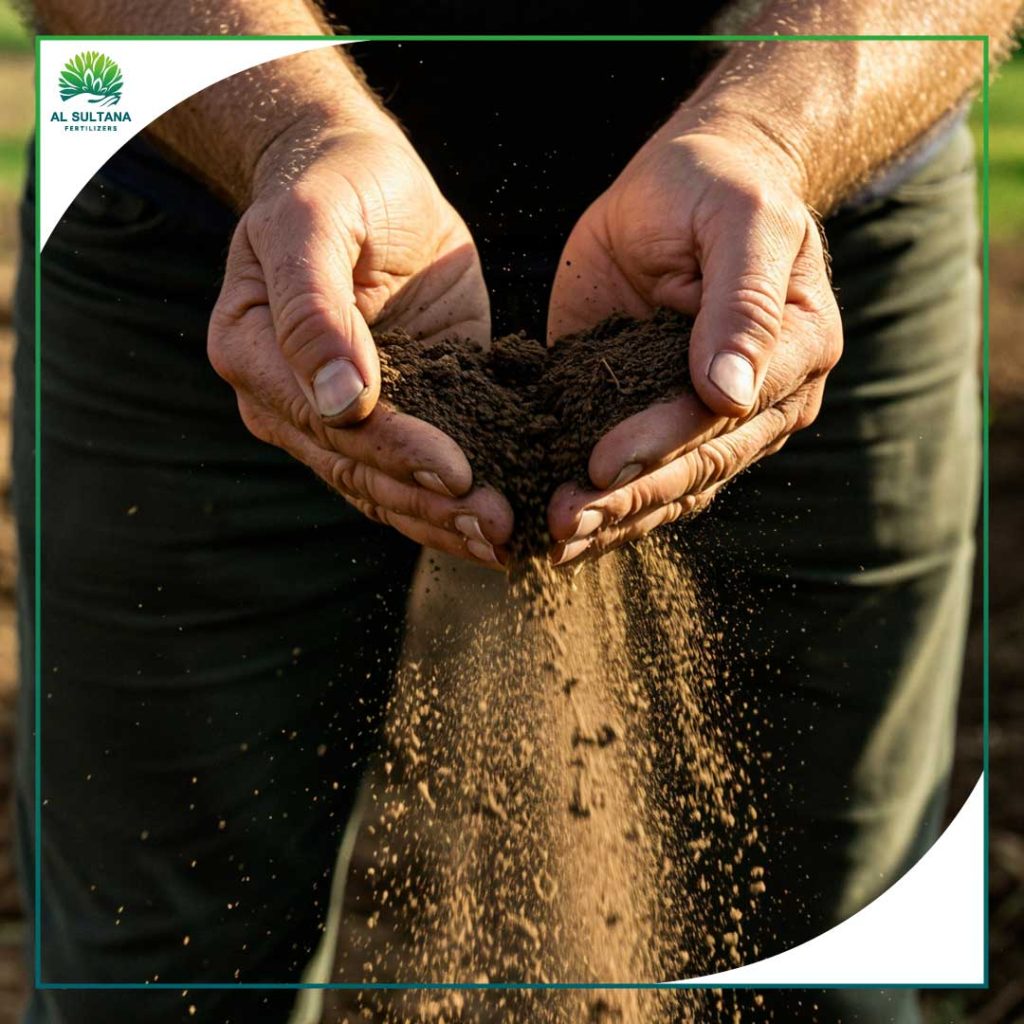
The first step in selecting the optimal fertilizer begins with soil testing. This analysis reveals the levels of essential nutrients (N, P, K), pH value, and organic matter content. With this data, a farmer can accurately determine the fertilizer type and required ratios, preventing deficiencies or excesses that could harm plants or pollute the environment.
Types of Fertilizers Produced by Al Sultana
Matching Fertilizer to Growth Stage
Each plant growth stage has its own nutrient requirements:
- Nitrogen (N): Critical in early stages to promote vegetative growth.
- Phosphorus (P): Supports root development and stimulates flowering.
- Potassium (K): Strengthens plants and improves fruit quality.
For example, a 3-1-2 ratio may be used in early growth, while 15-15-30 is suitable for flowering and fruiting phases.
Matching Fertilizer to Crop Type
Different crops have different nutrient demands:
- Leafy vegetables (e.g., lettuce, spinach): Higher nitrogen ratios.
- Cereal crops (e.g., wheat, corn): Balanced nitrogen-phosphorus supply.
- Flowers: Higher phosphorus content to encourage blooms.
- Fruit trees: Potassium-rich blends to enhance fruit quality.
Application Method and Requirements
Fertilizer choice also depends on application method:
- Granular fertilizers: Ideal for soil incorporation before or during planting, providing long-lasting nutrition.
- Liquid or water-soluble fertilizers: Suitable for foliar spraying or drip irrigation, offering rapid nutrient uptake.
Specialized Fertilizers (Targeted for Specific Goals)
Soil-Improvement Fertilizers
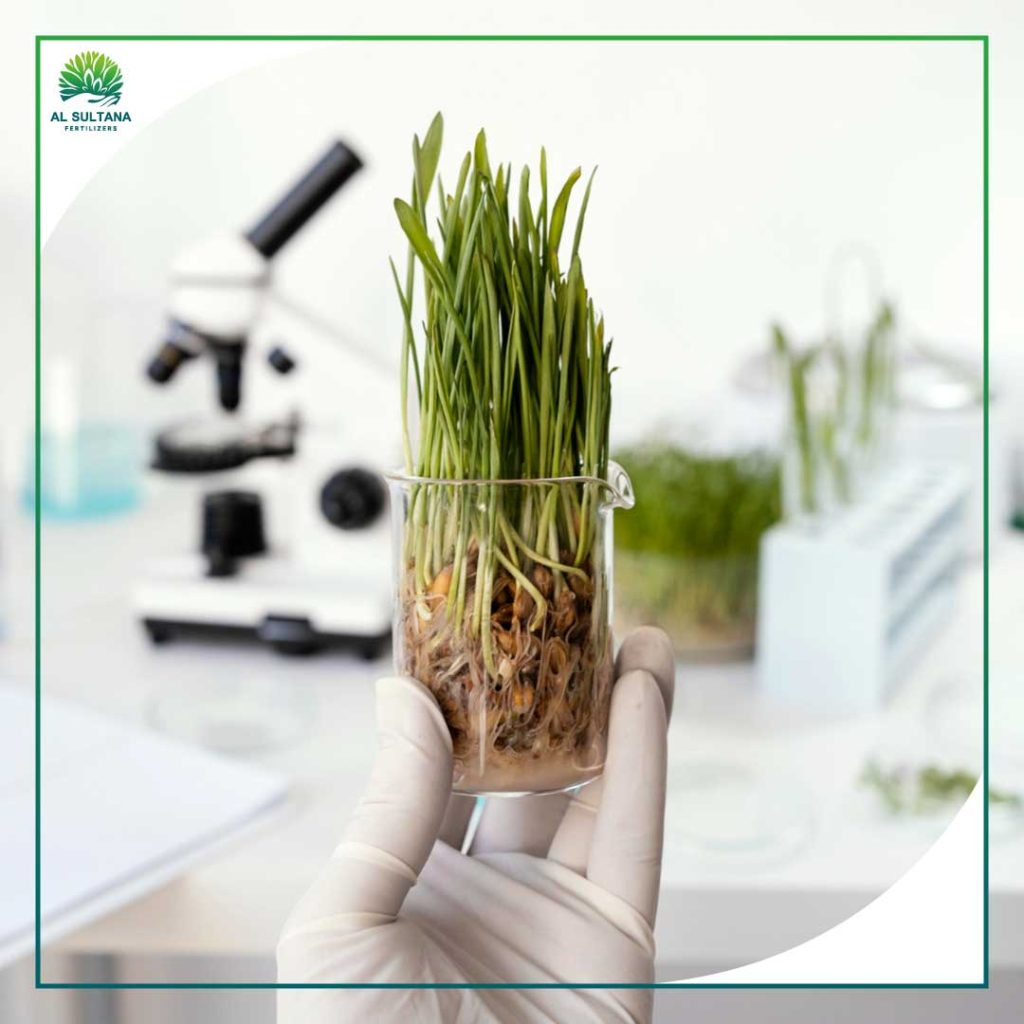
These aim to improve soil properties and address issues such as excessive acidity or phosphorus deficiency. Examples include phosphorus sources like SSP or DAP to replenish deficiencies and promote root growth. In acidic soils, agricultural lime can be applied to adjust pH and enhance nutrient uptake efficiency.
Types of Fertilizers Produced by Al Sultana
Drought- or Disease-Resistant Fertilizers
High-potassium formulations enhance plant immunity and resilience to environmental stresses such as drought or temperature fluctuations, while also improving resistance to fungal and bacterial diseases. Potassium strengthens cell walls and maintains water balance in plant tissues, reducing moisture loss and preserving yield quality under harsh conditions.
Stage-Specific Formulations
Al Sultana offers nutrient programs tailored to each growth stage:
- Establishment: High nitrogen for vegetative growth.
- Root development: Increased phosphorus for strong root systems.
- Flowering: Balanced phosphorus and potassium for robust blooms.
- Maturation and fruiting: High potassium for improved fruit quality and extended shelf life.
Quick Tips
- Avoid over-fertilization—excess amounts can damage crops and increase soil salinity.
- Test soil before choosing a fertilizer—laboratory analysis provides accurate NPK and micronutrient data.
- Start with balanced feeding, then specialize based on crop needs.
- Combine organic and mineral sources to improve long-term soil health.
Why Farmers Trust Al Sultana Fertilizers
With years of expertise in producing granular and compound fertilizers, Al Sultana is committed to delivering products that combine top-tier quality with precise formulation. Modern production lines and laboratory testing ensure effective, safe fertilizers that meet both local and international standards. A broad distribution network keeps us close to farmers, providing technical support and tailored nutrient solutions for every crop type
Conclusion
Fertilizer diversity is not a luxury—it is a smart agricultural strategy that opens the door to higher yields and superior crop quality. By selecting the right formulation, you can meet your plants’ needs at every stage and ensure a strong, profitable harvest.
📞 Get a free consultation now from Al Sultana’s fertilizer experts and discover the optimal solution for your crop.
📄 Download our fertilizer catalog or request a trial sample via our website.
🔗 Contact us directly through Al Sultana’s website to start your journey toward improved agricultural productivity.
Read also Inside Our Factory: The Production Stages of High-Quality NPK Fertilizer
What are the main types of fertilizers produced by Al Sultana?
A1: Al Sultana produces a wide range of fertilizers, including balanced NPK compounds, slow-release/coated fertilizers, organomineral blends, and liquid/water-soluble fertilizers. Each type is designed to meet specific crop needs, improve soil health, and maximize yield efficiently.
How can I choose the right fertilizer for my farm?
A2: Start with soil testing to identify nutrient levels and pH. Match fertilizer type to crop requirements and growth stage. Use granular fertilizers for soil incorporation and liquid fertilizers for foliar or drip irrigation. Combining organic and mineral sources ensures long-term soil fertility.
What are the benefits of using slow-release or organomineral fertilizers?
A3: Slow-release fertilizers gradually provide nutrients, reducing leaching and frequent application. Organomineral fertilizers combine organic matter with NPK nutrients, improving soil structure, microbial activity, water retention, and long-term fertility while maintaining high crop productivity.
CALL US FOR MORE INFO