


In modern agriculture, nitrogen is a vital macronutrient that directly impacts crop yield and quality. Urea Fertilizer N46, containing 46% nitrogen, the highest among solid fertilizers, is a preferred choice for farmers due to its efficiency and cost-effectiveness.
Widely used in open fields, orchards, and forage production, Urea Fertilizer N46 also serves as a key ingredient in compound fertilizers like NPK blends. This article outlines its composition, benefits, and best application practices to help farmers and manufacturers achieve optimal productivity and efficiency.
Table of Contents
What is Urea N46?
Definition and Chemical Composition
Urea is a white crystalline organic compound primarily composed of carbon (C), nitrogen (N), oxygen (O), and hydrogen (H). With 46% nitrogen content by weight, it is designated N46 in fertilizer classification (46-0-0). This high concentration makes it a compact, easily transportable, and storable nitrogen source compared to alternatives such as ammonium nitrate or ammonium sulfate.
Core Manufacturing Processes
Haber–Bosch Process
Produces ammonia (NH₃) from atmospheric nitrogen (N₂) and hydrogen (H₂) under high pressure and temperature in the presence of metallic catalysts.
Bosch–Meiser Process
Reacts ammonia with carbon dioxide (CO₂) to form a urea solution, which is then concentrated and converted into granules or prills depending on market demand.
Granules are typically harder and more resistant to degradation, while prills offer uniform particle size and improved blending in compound formulations.
Why is it Widely Used?
High Nitrogen Content (46%)
Its high nitrogen concentration allows farmers to meet crop nutrient demands with less fertilizer, reducing packaging, transport, and application costs—making it a top choice for both large-scale farms and industrial plants.
Cost-Effectiveness & Storage Safety
Compared to fertilizers such as ammonium nitrate, Urea N46 provides nitrogen at a lower cost per unit and is safer to store, with significantly reduced risks of combustion or detonation.
Versatility in Agricultural Practices
Urea N46 can be applied directly to soil, dissolved in fertigation systems, or used as foliar sprays for rapid uptake. This adaptability supports diverse crop types, irrigation methods, and climatic conditions.
Growth Support
It stimulates vigorous vegetative growth, enhances photosynthesis, boosts leaf and flower production, and strengthens root systems—improving water uptake and drought tolerance.
Technical Aspects of Urea N46 Production
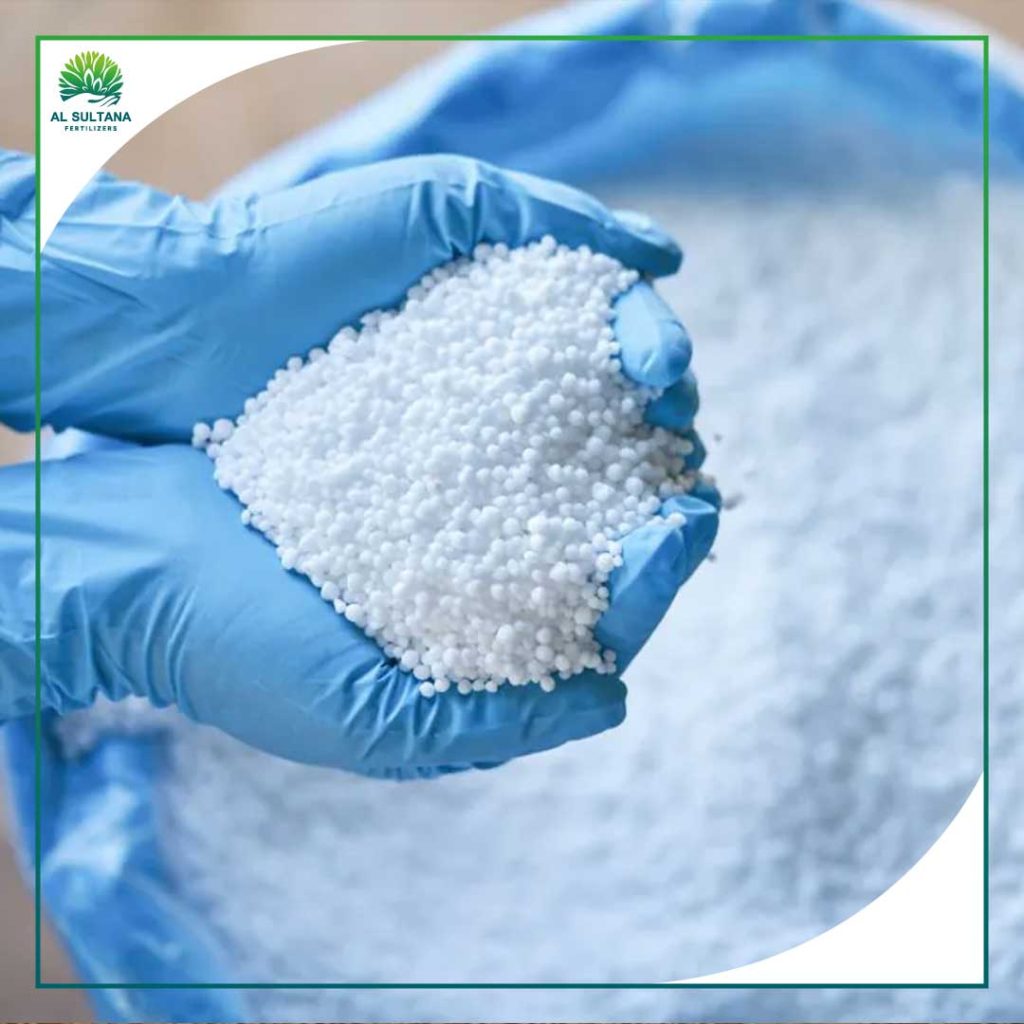
Urea Fertilizer N46
Industrial Requirements and Production Lines
The process begins with ammonia production via Haber–Bosch, combining nitrogen from air with hydrogen from natural gas. The ammonia then undergoes Bosch–Meiser synthesis with CO₂ to yield raw urea solution.
Subsequently:
- Granulation or prilling produces uniform particles.
- Drying ensures low moisture content and product stability.
- Packaging in moisture-proof bags protects during storage and transport.
These stages ensure a high-quality, stable product meeting both agricultural and industrial standards.
Loss Management (Volatilization)
One major challenge is ammonia volatilization, where nitrogen is lost to the atmosphere if urea remains on the soil surface for extended periods.
Loss mitigation strategies include:
- Incorporating urea into soil immediately after application.
- Dissolving it in irrigation water.
- Using urease inhibitors to slow enzymatic hydrolysis, allowing more nitrogen uptake by plants.
Advantages and Disadvantages
Advantages
- High nitrogen concentration (46%) – less material per hectare.
- Cost efficiency compared to lower-N fertilizers.
- Safe storage with minimal fire/explosion hazard.
- Compatibility with NPK blends and custom mixes.
Disadvantages & Environmental Risks
- Nitrogen loss through volatilization and leaching can pollute water sources.
- Greenhouse gas emissions (N₂O, NOₓ) may increase.
- Overuse can cause salt injury to plants due to high salt index.
Recommendation: Always follow soil test results and application guidelines.
Best Practices for Applying Urea N46

Urea Fertilizer N46
Timing & Distribution Technique
Apply before rainfall or irrigation to ensure nitrogen movement to root zones. Avoid spreading during hot, dry, or windy conditions.
Incorporation into Soil
Mixing or injecting urea reduces volatilization losses significantly.
Split Applications
Deliver nitrogen in multiple smaller doses throughout the growing season to match crop demand and reduce leaching.
Innovations in Urea Use
Coated Urea (Slow-Release)
Sulfur or polymer coatings regulate nitrogen release, minimizing loss and maintaining steady nutrient availability—ideal for long-season crops.
Nano Urea
Liquid nano-formulations enhance nitrogen use efficiency, reduce required dosage, and minimize environmental impact.
Quick Tips for Effective Use
- Avoid overdosing.
- Blend with organic matter (e.g., compost, wood shavings).
- Apply before rainfall/irrigation and incorporate into soil.
- Perform soil tests to determine optimal rates.
Conclusion
Urea Fertilizer N46 remains one of the most effective and widely adopted nitrogen fertilizers in modern agriculture, thanks to its unmatched nitrogen concentration, versatility, and economic benefits.
At Al Sultana, we supply premium-grade Urea Fertilizer N46 meeting international quality standards, with various packaging options to suit your needs.
read more Types of Fertilizers Produced by Al Sultana:Your Guide to Choosing the Right Fertilizer
What makes Urea Fertilizer N46 different from other nitrogen fertilizers?
Urea Fertilizer N46 stands out due to its exceptionally high nitrogen content (46%), which is higher than most solid nitrogen fertilizers. This allows farmers to supply sufficient nitrogen with less material, reducing transportation and storage costs while supporting vigorous plant growth and higher crop yields efficiently.
How can farmers minimize nitrogen loss when using Urea N46?
Nitrogen loss from urea occurs mainly through volatilization and leaching. To minimize this, farmers should incorporate urea into the soil immediately after application, apply it before irrigation or rainfall, use split applications during the growing season, or utilize urease inhibitors or coated slow-release urea for more efficient nutrient absorption.
What are the environmental considerations when using Urea Fertilizer N46?
While Urea N46 is highly effective, excessive or improper use can lead to environmental issues such as water pollution from nitrate leaching and greenhouse gas emissions (N₂O). Farmers must follow soil test recommendations, apply correct doses, and consider slow-release or nano-urea technologies to reduce environmental impacts while maintaining crop productivity.
CALL US FOR MORE INFO